Adobe Commerce as a Cloud Service
Less Maintenance. More Innovation. Greater Growth.

How Adobe Commerce as a Cloud Service (ACCS) is changing enterprise commerce, and why businesses should be exploring what it means for their future.
For many businesses, managing an enterprise commerce platform has become increasingly complex. Infrastructure management, security updates, platform upgrades and custom development can consume significant time and budget, often leaving less room for the innovation that actually drives growth. Adobe Commerce as a Cloud Service (ACCS) offers a different approach.
Moving Adobe Commerce to a fully managed, cloud-native SaaS model, ACCS is designed to reduce the burden of platform maintenance while giving businesses greater flexibility to develop and improve their digital commerce experiences.
At The Pixel, we're actively exploring what this shift means for our clients and where ACCS could deliver meaningful commercial and operational benefits.
What's different about ACCS?
ACCS isn't simply another hosting option for Adobe Commerce. It represents a fundamental change in how the platform is managed, extended and evolved.
There are five key benefits businesses should be considering.
1. Less maintenance. More time for growth.
Traditional commerce platforms require ongoing investment in infrastructure, security patches, upgrades and maintenance.
With ACCS, Adobe takes responsibility for managing the core platform, infrastructure and security updates.
This reduces the operational burden on internal technology teams and creates more opportunity to focus on customer experience, conversion and business growth.
2. A platform built to scale
Whether responding to seasonal demand, entering new markets or supporting business expansion, scalability is essential.
ACCS uses cloud-native infrastructure with automatic scaling, helping businesses respond to changing demand without continually managing the underlying infrastructure.
The result is a more flexible foundation for future growth.
3. Faster innovation without traditional upgrade cycles
One of the biggest challenges with enterprise commerce is the time and effort involved in keeping platforms up to date.
ACCS introduces a versionless SaaS model, with Adobe managing ongoing core platform updates.
Rather than planning major upgrade projects, businesses can redirect more of their resources towards introducing new capabilities, improving customer journeys and responding to changing market demands.
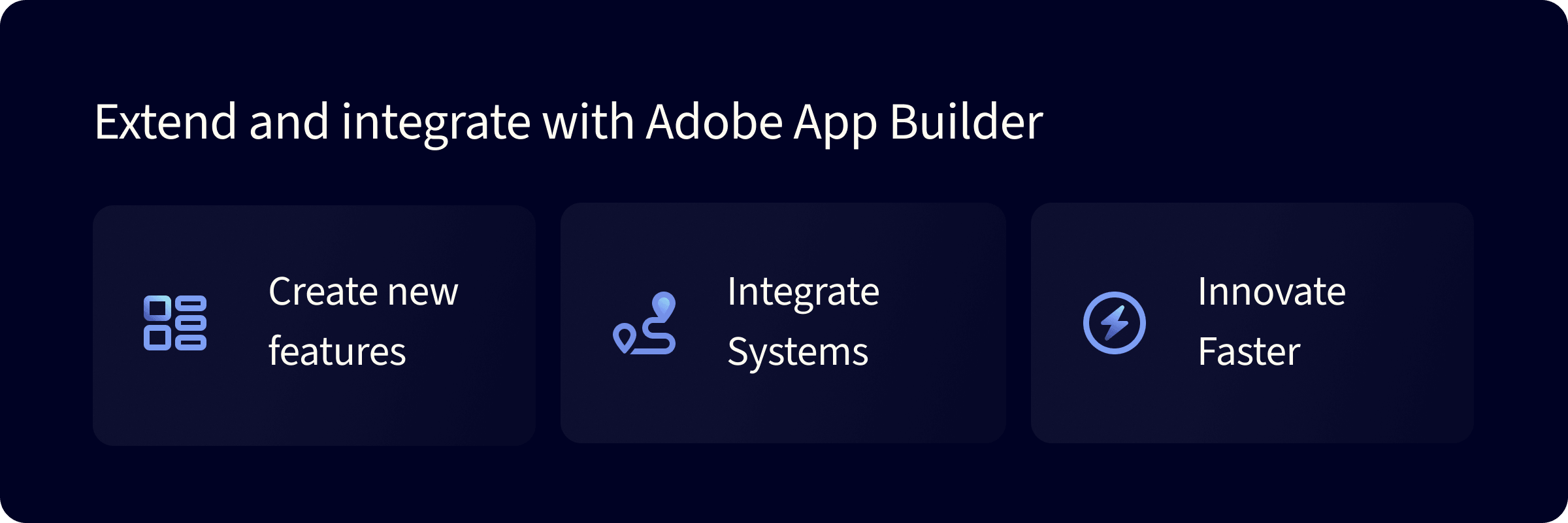
4. Greater flexibility with Adobe App Builder
One of the most significant changes is how businesses can develop and extend their commerce platforms.
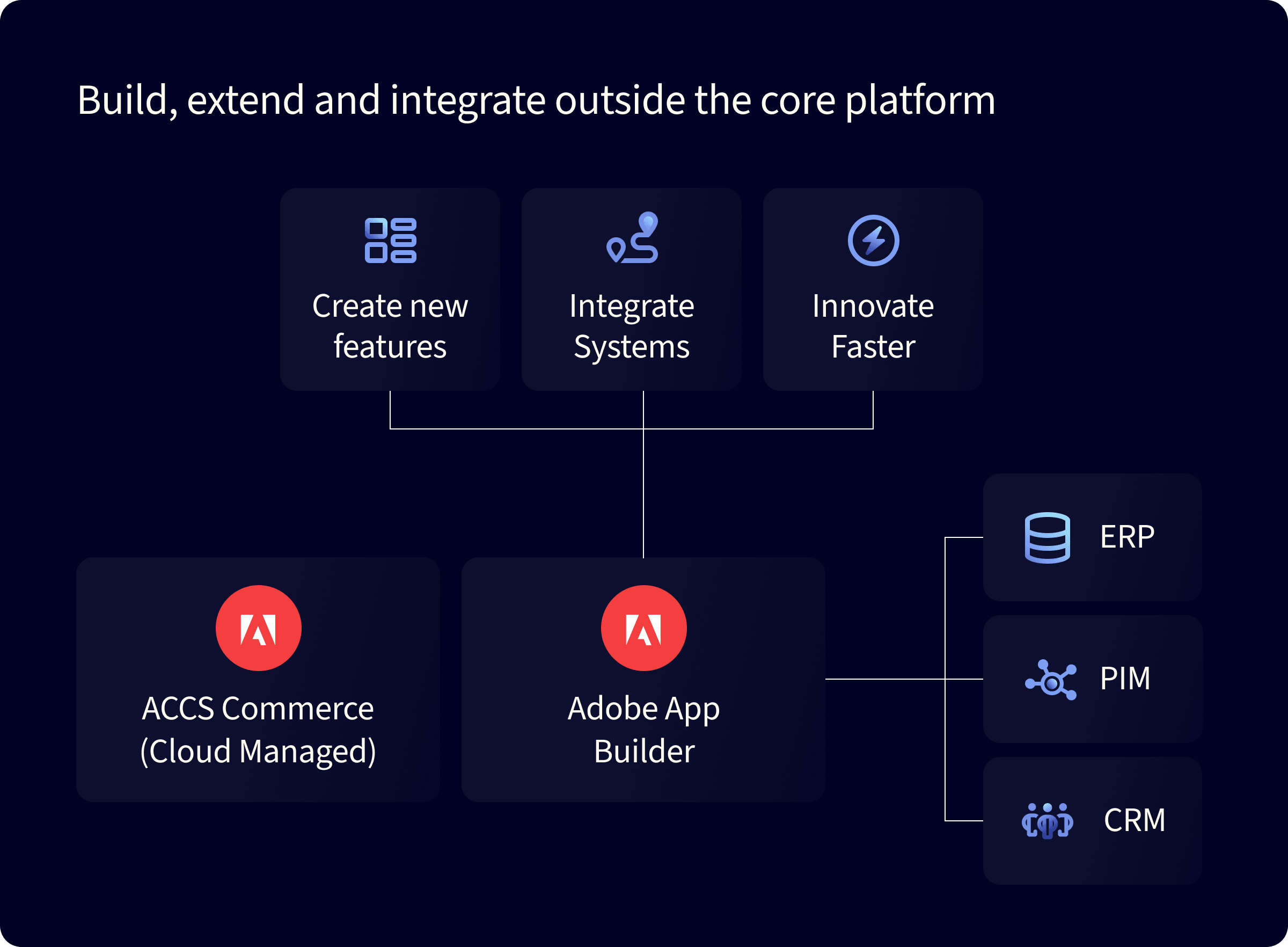
Adobe Developer App Builder enables organisations to build custom functionality and integrations outside the core commerce application.
Using APIs and event-driven architecture, businesses can connect enterprise systems, develop specialist functionality and introduce new services without relying on extensive modifications to the underlying platform.
For organisations with complex ERP, PIM, CRM or other business systems, this approach offers the potential for a cleaner, more flexible architecture.
It also makes future changes easier to manage by reducing dependencies between custom functionality and the core commerce platform.
5. Reduced complexity and a more predictable operating model
Enterprise commerce can become expensive to maintain, particularly when platforms have accumulated years of customisation and technical debt.
By combining managed infrastructure, ongoing platform updates and modern extensibility, ACCS offers an opportunity to simplify the technology landscape.
While moving to ACCS requires investment and careful planning, the longer-term opportunity is to reduce maintenance overhead and create a more sustainable operating model.
What does this mean for existing Adobe Commerce customers?
For businesses already using Adobe Commerce, ACCS presents an opportunity to rethink how their commerce platform is structured and managed.
However, moving to ACCS isn't necessarily a straightforward migration.
Existing customisations, integrations, storefront technologies and operational processes all need to be considered. In particular, businesses with extensive PHP customisations may need to rethink how that functionality is delivered using App Builder and other extensibility approaches.
The question isn't simply whether to move to SaaS. It's whether ACCS provides a better foundation for the business's future requirements.
That requires understanding the existing architecture, identifying opportunities to simplify it and assessing the commercial benefits against the cost and complexity of change.
How The Pixel is exploring ACCS with clients
As an Adobe Gold Solution Partner, The Pixel is actively exploring how ACCS could help our clients modernise their commerce platforms and unlock new opportunities.
We're particularly interested in understanding where businesses could benefit from:
- Reducing infrastructure management and ongoing maintenance costs.
- Simplifying complex commerce architectures and integrations.
- Using Adobe App Builder to modernise custom functionality.
- Improving scalability and flexibility.
- Freeing up technology teams to focus on innovation and commercial performance.
Our approach starts with understanding each client's existing technology, business challenges and future ambitions.
From there, we can help assess whether ACCS is the right direction, what changes might be required and where the greatest opportunities lie.
The objective isn't simply to move businesses onto a new platform. It's to make sure their technology is helping them grow rather than holding them back.
Is ACCS right for your business?
Adobe Commerce as a Cloud Service represents a significant evolution in enterprise commerce, but the benefits and implications will be different for every organisation.
Whether you're already using Adobe Commerce, considering a platform modernisation programme or exploring ways to reduce technical complexity, now is a good time to understand what ACCS could offer.
Conclusion
At The Pixel, we're exploring these opportunities with our clients and would welcome a conversation about what ACCS could mean for your business.