Product Discovery: Why Trust and Reviews Continue to Shape Consumer Decisions
The way consumers discover, research and purchase products is constantly evolving.
.png)
New technologies are emerging, shopping journeys are becoming more fragmented, and brands have more channels than ever to reach potential customers.
Yet despite these changes, one factor remains remarkably consistent: trust.
The Pixel's latest Product Discovery Survey ran in-conjunction with Athos Commerce reveals that while AI-powered shopping tools are beginning to gain attention, consumers still rely heavily on traditional discovery channels and authentic customer feedback when making purchasing decisions.
Search Remains the Starting Point
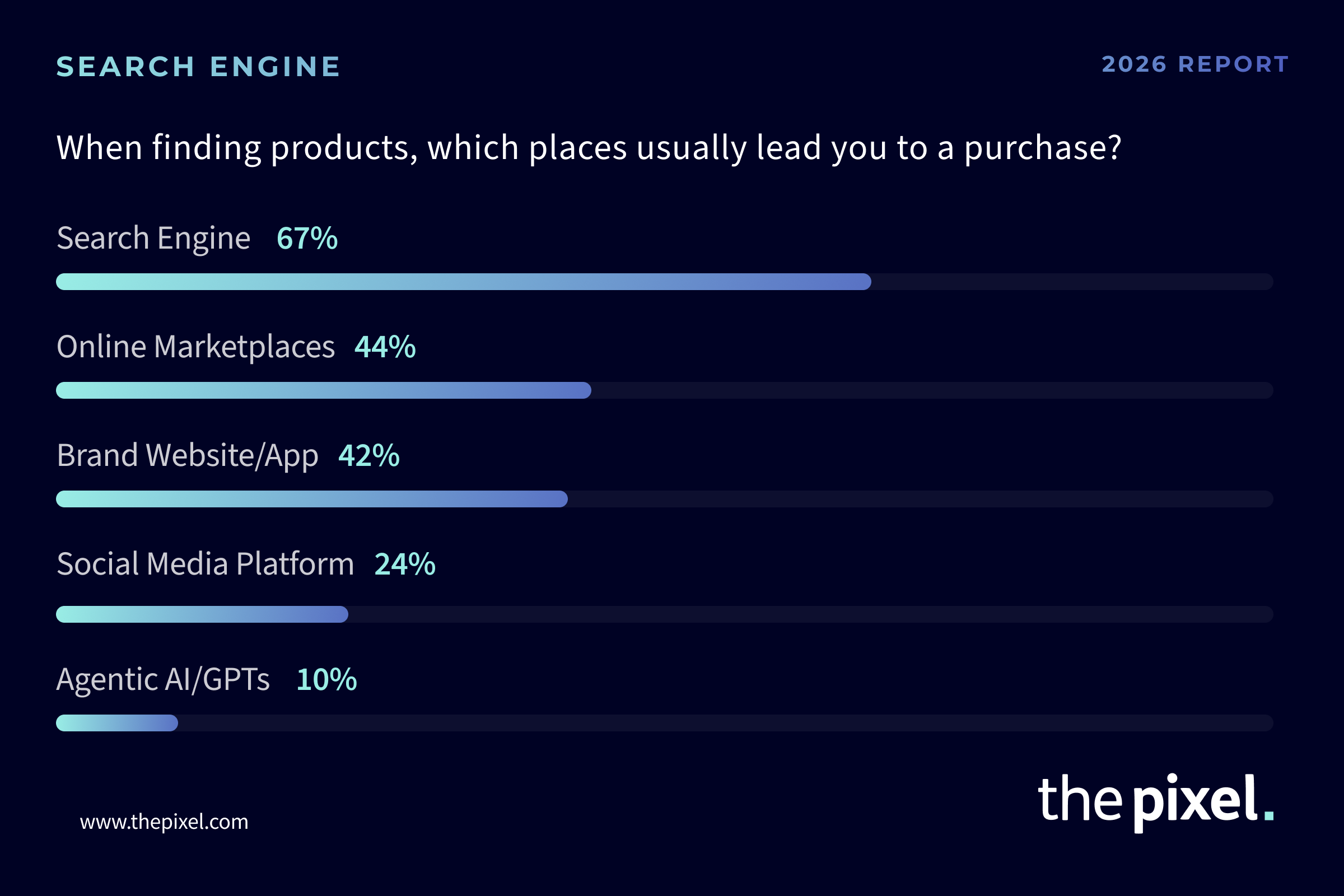
When consumers begin researching a product, search engines continue to dominate the discovery journey. Nearly two-thirds of shoppers (67%) use search engines to find products, making them the most influential discovery channel.
Online marketplaces such as Amazon, eBay and Vinted follow closely behind, with 44% of consumers using these platforms to explore products. Meanwhile, 42% choose to visit a brand's website or app directly.
Social media is also playing an increasingly important role, influencing almost a quarter (24%) of consumers. Content-led discovery through platforms such as Instagram, TikTok and Facebook continues to shape buying behaviour, particularly among younger audiences.
Despite the growing industry focus on AI, adoption remains relatively limited. Just 10% of consumers currently use Agentic AI tools or GPTs to help discover products, suggesting that while the technology shows promise, mainstream usage is still in its early stages.
Reviews Matter Almost as Much as Price
Price remains the single biggest influence on purchasing decisions, cited by 79% of consumers.
However, customer reviews are not far behind, influencing 60% of shoppers and ranking ahead of product descriptions (52%), product imagery (43%), delivery information (37%), returns policies (34%) and even brand reputation (33%).
For retailers, this highlights an important shift in consumer behaviour. Shoppers increasingly place greater trust in the experiences of other customers than in traditional brand messaging.
The significance of reviews becomes even more apparent when looking at overall purchase behaviour. More than three-quarters of consumers (76%) describe reviews as either "important" or "very important" when deciding whether to buy a product.
Authenticity Drives Confidence
Not all review formats are viewed equally.
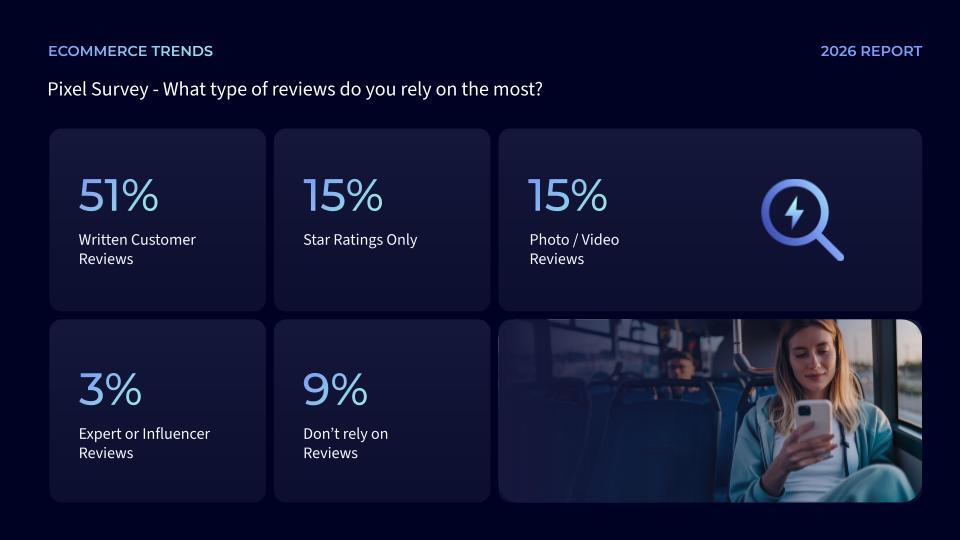
Written customer reviews remain the most trusted source of feedback, relied upon by 58% of consumers. In comparison, star ratings alone account for 15%, while photo and video reviews also influence 15%.
Perhaps most notably, expert and influencer reviews carry surprisingly little weight, influencing just 3% of shoppers.
The findings suggest consumers are looking for genuine, detailed accounts from people who have actually used a product. They want context, practical insights and real-world experiences that help them make informed decisions.
The Challenges Consumers Face Online
While online shopping offers unprecedented convenience, consumers still encounter significant barriers during the research process.
The most common frustration is unclear pricing or hidden costs, cited by 21% of respondents. This is followed by having too many choices (18%), highlighting the growing challenge of decision fatigue.
Confusing product information and difficulties comparing products each scored 16%, while fake or unhelpful reviews concerned 12% of consumers.
These frustrations point to a broader challenge for ecommerce brands: helping customers navigate choices quickly, confidently and transparently.
Poor Experiences Come at a Cost
Today's consumers have little patience for online experiences that create friction.
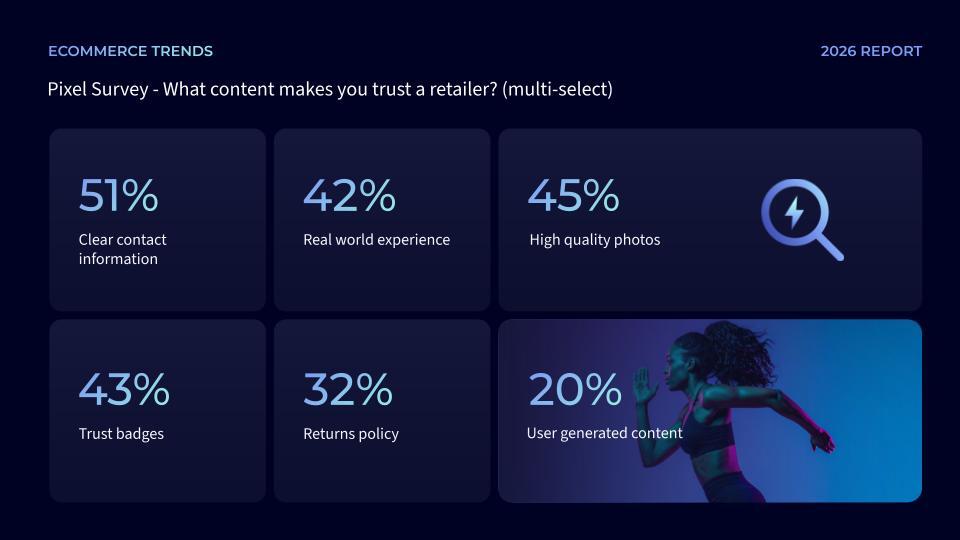
Nearly six in ten shoppers (59%) say they would leave a product page immediately if it contained too many pop-ups. Slow-loading pages (47%) and websites that appear untrustworthy (46%) are also major reasons for abandonment.
Other factors that drive customers away include poor-quality imagery (38%), high delivery costs (37%), pricing that appears suspiciously high or unusually low (37%), a lack of customer reviews (35%), confusing site navigation (31%) and insufficient product information (25%).
The message for retailers is clear: trust is built through every aspect of the customer experience. From site performance and transparent pricing to content quality and customer feedback, every touchpoint influences conversion.
Looking Ahead: Trust Will Remain the Competitive Advantage
Although AI-powered product discovery tools are beginning to enter the market, consumers continue to rely primarily on search engines, online marketplaces and brand websites when researching products.
More importantly, they continue to rely on one another.
As product discovery evolves, the brands that succeed will be those that make decision-making easier. Transparent pricing, comprehensive product information, fast and intuitive user experiences, and authentic customer reviews are no longer differentiators — they are baseline expectations.
To receive a full copy of The Pixel's Product Discovery Survey covering UX, paid search, social commerce and AI, please contact aynsley.peet@thepixel.com.
Conclusion
Technology may change how consumers find products, but trust remains the factor that ultimately drives purchase decisions.

.jpg)
.jpg)
.png)
.jpg)

.jpg)

%20(1).png)
.png)